Showing posts with label hospital. Show all posts

3.11.2023

weekend update

At 3:30 this morning, Calvin had his first seizure in three weeks. Since beginning the drug, Xcopri, in November of 2021, he has been enjoying "longer" stints, including one seizure-free span of forty-five days. We haven't seen any focal seizures for over a year. So, despite a trip to the emergency room last April when he broke his hip at school, then having to undergo surgery to install three metal screws to fix it, and despite another trip to the emergency room on New Year's Eve for an excruciating case of cholelithiasis (gallstones), plus gastroenteritis and aspiration pneumonia, Calvin looks to be heading for his best seizure control in years.

As far as the gallstones go, Calvin had an endoscopic retrograde cholangiopancreatography (ERCP) procedure at the hospital on March 1st. After waiting for three hours in a type of holding cell, he again went under general anesthesia. The procedure, which involves the insertion of a scope into his esophagus, went fine, though the physician did not find the gallstone that was allegedly stuck in his common bile duct. Instead, what the doc found was "sludge"—bits of stones and/or fat, perhaps—which he cleared out. He also widened the sphincter where Calvin's common bile duct enters the duodenum, so that future stones can pass more easily into the intestine and are less likely to block the pancreatic duct, which can result in serious, sometimes lethal, consequences.

So, I guess one could say that the ERCP was successful. Calvin is eating well again and thankfully has not exhibited the kind of pain we saw him experience in December and January.

So, that's the update, folks, except to add that hopefully Calvin's seizure this morning will turn out to be a one-off.

Thank you for your thoughtfulness and well wishes. As always, they mean the world.

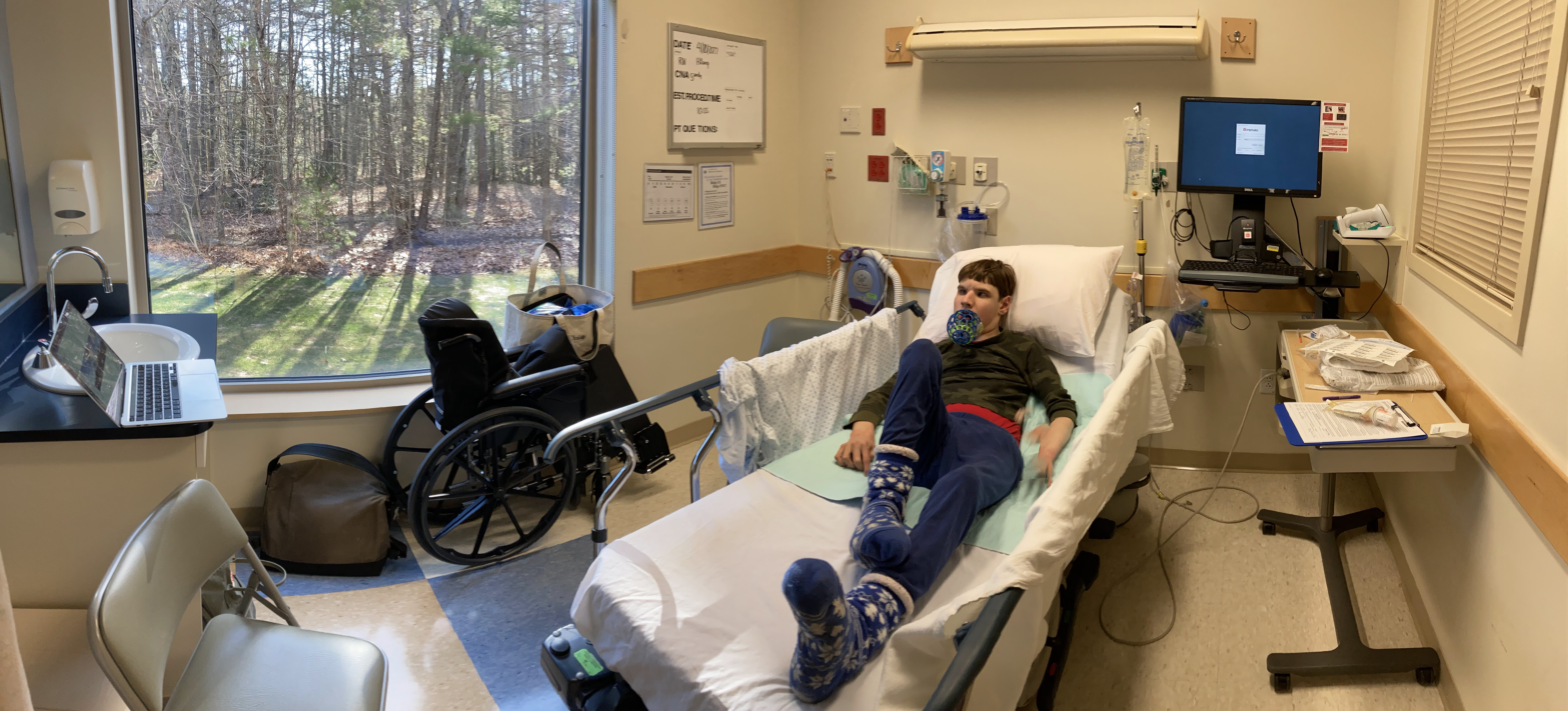
Calvin waiting patiently to be prepped for the ERCP

2.28.2023

hope and trepidation

Tomorrow morning, Calvin and I will finally make our way to Maine Medical Center for his endoscopic retrograde cholangiopancreatography (ERCP) meant primarily to remove at least one gallstone that is stuck in his common bile duct and which probably caused the excruciating waves of pain and elevated pancreatic enzyme that landed him in the emergency room on New Year's Eve. Calvin has likely needed this procedure for weeks if not months, but it has taken this long to get it on the books because—although every radiologist who read Calvin's CT scans and sonograms reported seeing at least one decent-sized gallstone—one of Calvin's providers wasn't convinced. Eventually, the procedure was scheduled, but then Calvin brought Covid home, and we had to postpone the operation a week.

The ERCP is not technically a surgery. It is an endoscopic procedure during which Calvin must undergo general anesthesia. The gastroenterologist—one of only two in Maine who has the skill to perform this operation—will insert a scope through Calvin's mouth into his esophagus to look for ulcers, etc., then go on to remove the problematic gallstone, perhaps having to widen the common bile duct so it passes more easily.

This will be Calvin's fourth time under general anesthesia. In the past, he has faired well, but the risk of dangerous complications is far worse for someone like him who is neurologically compromised and prone to getting pneumonia which, by the way, he was diagnosed with on New Year's Day. The last time Calvin had to have general anesthesia was last April during surgery for the hip he broke at school (a clean break at the base of the femoral head) when his aides let him walk around by himself and attempt to sit in a chair, which he most regrettably though not surprisingly missed (his vision and coordination are not good).

It is hard to put into words how gut-wrenching and nerve-racking it feels to watch your sweet, nonverbal, cognitively impaired child be wheeled down a hallway with a bunch of strangers into an even stranger room (operating rooms are cold, chrome, sterile places) without any understanding of what is about to happen or why, and without mom or dad by his side to comfort him. To say the experience is worrisome is an understatement. It is the cause of great trepidation.

And so, using the gastroenterologist's patient portal, I wrote to the physician who will be performing the ERCP:

"can i stay with calvin until he goes under general anesthesia?"

The doc replied within minutes, "yes. you can stay with him."

I breathed a sigh of (some) relief.

With any luck, the procedure will go off without any hitches, Calvin will make it safely out from under the anesthesia without aspirating or suffering from too much irritability, and we'll be home sometime tomorrow late afternoon or early evening. Hopefully, Calvin will get some immediate relief from the prolonged pain and discomfort that this gallstone has likely caused him and, hopefully, he'll be protected, at least for a while, from the dangerous sometimes lethal effects that gallstones can cause.

Sadly, Michael cannot join us because it has not yet been ten days (hospital protocol) since his Covid diagnosis, and because he'd miss another day of teaching; I urged him into staying behind. Thankfully, one of my besties, Barbara, is going to drive me and Calvin to the hospital in Portland, and another bestie, Matty, will shuttle us back so I can attend to Calvin's needs on the drive home.

Until then, cross your fingers and toes. 

Michael, in white, escorting Calvin as far as allowed before Calvin's hip surgery last April.

2.07.2023

nineteen

Nineteen years ago today—six weeks before his due date, two weeks after a sonogram revealed an alarming absence of white matter in his brain, and a week before a scheduled cesarean at Boston's Children's Hospital—Calvin came into the world during an emergency cesarean at Portland's Maine Medical Center—in the middle of an ice storm. I guess that's how he rolls.

Seven weeks passed before we brought Calvin home from the hospital. At the time, Michael's employer did not offer parental leave (oh, how we could still use some) and, while Calvin was in the neonatal intensive care unit fighting to thrive, the college asked Michael to take on an ill colleague's course of classes in addition to his own. Thankfully, for our sake, he said no.
Every evening after work, Michael made the thirty-mile drive to Portland to be with me and Calvin in the hospital before spending the night with me in the nearby Ronald McDonald House where parents of sick children are provided meals, a comfortable place to sleep and, for some, a private place to grieve.
Halfway through those heart-wrenching and difficult first seven weeks, when Calvin became just strong enough to be transported via ambulance, he and I took up residence in our local hospital's labor and delivery ward. Every night for three and a half weeks, Michael brought me a home-cooked meal, which we ate together at a little round table in the corner of the room while Calvin slept. Our friends, Ta and Jerry, and Michelle brought us meals, too.
I hear parents remark, often lamentably, about how quickly their children grow up. I get the sentiment; I feel the fleeting passage of years in my life, too. In some ways, yes, Calvin "grew up" in a blink. But his nearly-imperceptible and in most ways halted progress has had a way of slowing time to a crawl; I mean, I'm still changing diapers after nineteen years; that kind of thing can have the affect of stunting time. But the protracted passage of time has led me to be mindful of every moment of the past eighteen years, and to have felt them deeply—beginning with the tragic sonogram, the fear, the feelings of grief and loss, the hopelessness and uncertainty, the joy and surprise, the frustration and resentment of raising a child like him. I've done and been through some difficult things in life, but nothing compares with this marathon. At the same time, I've felt the most extraordinary love for my nonverbal, legally blind, autistic, enigmatic, impossible child who has virtually been joined at the hip with a me for nineteen years. Suffice to say, it's been a wild ride; I'm exhausted and proud.
Last year, instead of celebrating Calvin's transition into manhood, I began his eighteenth birthday by cradling him in my arms like a baby again, my eyes stinging and welling up after four days of seizure-related worries, woes and sleep deprivation. The world looks blurry through watery eyes and wet lashes, and I thought about how much easier it would be to raise him if it weren't for relentless seizures and drug side effects that make him so irritable at time, and impossibly restless. 

This year, the day began as most do more recently, which was with a long and strong embrace from Calvin, including mutual back rubs, as he stood in his pajamas after I helped him out of bed and before I changed his soaking diaper and onesie and got him dressed for school. It has been nine days since his last seizure having avoided one on the full moon, so we have that to celebrate, too.

At nineteen, my sweet Calvin still cannot utter a word, put on his own socks and shoes, eat independently with a spoon, follow most instructions, turn a door knob, read a book, choose items at the grocery store, calm his body or be by himself. Still, there are moments of joy with my heartbreak kid, who can both exasperate me and melt me into a mess of motherly love. I guess, in that sense, we're no different than any other mother and child.

1.04.2023

new year's eve

Calvin and I spent New Year's Eve in the ER. It was the first New Year's Eve in decades that I've stayed awake past midnight! Calvin and I both got some sleep, but were interrupted numerous times at ungodly hours for exams, IVs, blood draws, vital signs, a CT scan, an X-ray, and an unsuccessful attempt at getting a urine specimen. Through all of it, my ailing, tired and uncomfortable child was a superstar.

Earlier that day, we went to see the doctor because Calvin had been experiencing waves of excruciating pain—pain so bad it seemed as if he were being stabbed in the gut repeatedly. The doctor ordered a blood draw. Later that night, she called to tell us that his pancreatic marker, lipase, was three times what it should be. She advised us to go to the ER immediately for possible complications of acute pancreatitis. The blood draw at the ER, however, showed a normal lipase level, and the CT scan indicated that his pancreas looked fine. The ER doctor noted, however, that there were a handful of gallstones she said we should keep an eye on.

The CT scan also revealed a case of aspiration pneumonia in the lower part of Calvin's left lung, possibly caused by regurgitation stemming from his case of viral gastroenteritis. They sent us home the following morning with a prescription for a two-week course of antibiotics. Still, my gut tells me that his pain may be stemming from the gallstone(s).
Despite the exhausting array of tests and interruptions, the care at our local hospital ER was amazing. Those folks work their asses off, only to be abused by rude and unruly patients (one man was screaming at them in the hallway in the middle of the night. My guess is that it was about wearing a mask. I feared he might get violent.)
Right now, Calvin is safe and sound in his cozy bed in hid dad's arms with his favorite toys. Since coming home, I've been able to go for daily runs. On New Year's Day, despite feeling like hell, I was grateful I could run out at my beloved Pennellville on such a beautiful, misty and balmy morning. As I ran, I thought about the hell we regularly go through with Calvin—some Hades worse than others. But in later recounting New Year's Eve to Michael, who had finally left us in the ER around eleven o'clock that night at my urging, I realized how amazing the whole experience was. With tears in my eyes, I related to Michael how the CT-scan technician, Matt, had put the lead vest on me as if he were helping me with my jacket at a dinner party. His concern for me and Calvin was palpable in the grace and gentleness he exhibited.

I went on to ponder our fortune at being admitted to the ER by my dear friend, Michelle, who is a nurse and whose daughter, a classmate of Calvin's, is very much like him. She gave me tons of hugs and assured me we were in good hands. Also, upon arriving at the ER, we were greeted by a kind, elderly gentleman. I don't remember his name, but while we waited with our limp and listless boy slumped in his stroller, the man approached to visit with us. He wondered, based on having heard me say our address, if we might be affiliated with nearby Bowdoin College. We told him that Michael teaches photography there.

"My son used to teach there," he replied, then told us his son's name, which didn't sound familiar.

"He died eighteen years ago ... from cancer," the man said, and as I expressed my sorrow, tears welled up in his eyes.

He went on to mention his daughter-in-law, who also teaches at the college.

"Yes, we love her! She has donated many times to epilepsy research on Calvin's behalf!" I told him.

Just then, a bed in the ER became available, and so I gave the man a hug goodbye, while wishing we could sit and visit longer.

Later, in reviewing the events of New Year's Eve, I realized, despite its myriad stresses, what a rich experience that night had been. I recognized, that while I wasn't touring Manhattan or Rome or Los Angeles or Iceland, I was having a profoundly memorable experience, perhaps more meaningful than if I were at a party with friends or traveling the world. It became clear that the strangers I met that night really meant something to me intimately, even if our encounters were fleeting—and maybe Calvin and I meant something to them.

Slowly, Calvin is recovering. He's drinking fluids again and taking a bit of food—applesauce, banana, dry toast and, today, nonfat yogurt. His bouts of pain have mostly passed. We will take him to see a general surgeon tomorrow to discuss his gallstone(s) and whether he needs to have his gallbladder removed. I hope not.

In the meantime, as I spend most of these days nursing Calvin—changing his diarrhea diapers, taking his temperature, giving him meds, offering fluids and food, cradling him in my lap as he sleeps—I'll continue to ruminate on the manner in which we rung in the New Year, which, no doubt, I'm not likely to forget, except, perhaps, when I run.

4.22.2022

road to recovery

On Wednesday morning, my son was wheeled into the operating room of our local hospital. Michael donned a bunny suit, cap and booties to accompany him until the anesthesiologist put Calvin under. Standing in the hospital room alone, looking out into the woods—a very similar view to the one we had when Calvin and I boarded in the labor and delivery ward for several weeks after Calvin was born—I felt a bit incredulous. Incredulous that my sweet little unassuming son was being drugged up, cut open, muscle splayed apart, femur drilled and fit with three stainless steel screws, all because of a regrettable accident at school the previous week. I was living one of my worst nightmares as the parent of a child who, despite his inner and outer loveliness, has already been the source of so much angst and grief.

The surgery lasted far longer than we expected, and therefore was a bit of a nail-biter. Michael and I sat in silence, my mind racing to all kinds of places that no parent wants their thoughts to go. But the good news is that the surgery seemed to go well, and it was lengthy because the surgeon had, in his own words, obsessed about the placement of screws in Calvin's wonky anatomy. He told us that Calvin could put weight on his leg whenever he's up to it! We were astonished, having been told earlier that Calvin would likely be confined to his bed and wheelchair for up to six weeks. More good news came later that day when we realized we didn't have to spend the night in the hospital, a place we don't relish for a number of reasons that could fill a blog post or more on their own.

To add insult to injury, that night Calvin had a seizure, which we had seen coming while in the hospital. Like all of his seizure of recent years, it stopped on its own, and we were able to thwart a second one by giving him extra THCA cannabis oil. We managed his hip pain with alternating doses of ibuprofen and acetaminophen and with half a tablet of oxycodone when it seemed, by Calvin's moaning, that the others weren't sufficiently doing the job. Obviously, none of us got much sleep, but we rested better than if we'd been in the hospital.

Through all of the trauma since Calvin's fall ten days ago (seems like eons), many dears have shown their love, concern and support. We had dog walkers for Smellie, and received all kinds of goodies—cards, bottles of wine, flowers, cake, dinner, homemade negronis, stuffed animals, homemade cookies, bread, and other treats. And we got hundreds of loving messages from friends, acquaintances and strangers, and offers to bring food to the hospital. The outpouring of support has been incredible.

This morning, Michael and I got Calvin out of bed. With great help from both of us—Michael supporting Calvin's body from behind, and me in front holding his hands—our boy took three very shaky and tentative steps. A little smile crept across his face as if doing something novel or accomplishing something great. We sat him down on the soft carpet in our bedroom where he crawled a few yards, his left knee turned slightly inward. Once more, we got him into a stand, but he held his leg off the ground as if lame, so we scooped him up and put him back into bed, lavishing him with praise for having done such a good job. Hours later, I hoisted Calvin out of bed to change his diaper, then stood him up for a moment, bracing him. He didn't want to put his foot down and appeared not to be able to bear any weight on it, so I lifted him back into bed again where he remains and is resting.

If today is any indication, Calvin's road to recovery looks like it might be a long one after all. I worry he won't get back to walking as well as he did before the accident, which, though his gait was awkward, he could get around to a great extent by himself without falling or tripping on his turned-in feet. I worry he might be in pain without being able to tell us. I worry he'll regress in other ways. I worry about future accidents. As for going back to school next week, it doesn't look possible without a wheelchair, which would mean the staff would have to do a lot of transfers from chair to changing table and back again. There's plenty of other things to consider—the state of his incision and protecting it, his strength, his stamina, his safety, his ability to heal and rest, his happiness, the risk to him.

This incident has been disconcerting and stressful, and has given us a lot to ponder. But, it has also been a cause to celebrate our good fortune—for our healthcare, our community, our home, our family, our friends and neighbors, for each other.

Yes, the road to recovery might be a long one, but one thing is clear: none of us will be walking it alone.

10.19.2021

again again

i wish it would rain again. patter on the roof. soothe my sorrows. quench and cleanse. inside, the light is warm and dim. my sister sent me a photo of an old flame. i can't quite place his face. don't know it's him. but then. but then. i note a smile that's only his. like so many, it's unfading. some things hardly change from their beginnings.

outside, winds arise and finger through the trees. pine needles shed like rain. the ground below turns solid copper. clouds begin to break as soon as they close in. again. again. leaves turn gold and crimson from one day to the next. autumn's alchemy. someday soon, a withering frost will hit. the moon is full again.

i crawl into bed with my son for the umpteenth time. he has just had a little fit ... again. his face is pale. i syringe a bit of cannabis between his lips. change his millionth diaper. in his short life, i've given him unknown numbers of pills and milliliters of medicine. still he seizes. again. again. in so many ways, he's still like an infant—drawing his knees up to his chest. wrapping his little arms around my neck. i think back to the week he was born. hooked up to leads and tubes inside a plexiglass box in the hospital. michael got no respite from work. instead, he was asked to do extra. thankfully, he declined the request. for seven weeks, calvin never left the hospital. my days and nights were spent there in the room with him. before and after work, michael provided us sustenance. so did some of our friends. it was all so uncertain and exhausting. and then. and then. seventeen years later, we're still dealing with calvin's diapers. still spoon-feeding him. still dreading the next seizure. each day the same. few changes. again. again.

the clock is off. it chimes four times at half past ten. it doesn't matter. its gong is comforting. smooth and round and soft like the box of wood that houses it. i think of the timepiece's beginning. a seed. a sprout. a sapling. a tree. a trunk. a log. a plank. a clock. i recognized my face in it when i entered the antique shop. i barely had a dime in my pocket. still, i knew i had to bring it home. it reminds me of getting through hardships. tick tock. tick tock.

as calvin rests, i see pictures of other people's kids standing straight and strong. they smile and wave and clown for the lens. i see photos of them running. playing sports with other children. watching movies with their kin. i'm fascinated. feel at once happiness and envy. i've learned to hold both emotions. it's necessary for understanding and survival. forgiveness. if only things had been different from the beginning. but then. but then.

the cast iron stove creaks with heat from a fire lit with paper and kindling. below the flames, a pile of embers glows and crumbles into chunks still reminiscent of their beginning. i hear my son up in his bed. he's rustling around in the covers. each time he moves his bed clicks. it triggers me. when i reach him, he's in the middle of another fit. those roving eyes and dusky lips. and i remember again when it all began. and how the fear and hurt and angst and stress keep happening. just like in the beginning. reliable, like the full moon and the rain and sun and wind. each week and month and year are the same. again. again.

2.07.2021

seventeen

seventeen years ago today, calvin was brought into the world. a full moon triggered him into existence. six weeks early. several days before a planned c-section in boston. on the heels of an ice storm. that's just how he rolls.

one o'clock in the morning. waking on a sheet soaked with clear fluid. remember dropping the f-bomb. quickly donning sweat pants, favorite boots, puffy coat. grabbing toothbrush, hairbrush and wallet. michael kicking open the ice-encased mudroom door. icy-black night. eerily quiet. rooflines, trees and power lines dripping with frozen crystals and diamonds. otherworldly. cold and still and strange as mars. breaths making frost inside of the car. traffic lights flashing caution reflecting as snowy yellow pools. desolate streets. feeling desperate and alone, but not overcome.

medivac helicopters grounded due to the storm. boston no longer an option. local hospital unable to deliver a preemie like calvin, his brain malformed. having nanoscopic contractions. thirty-five-mile ambulance ride to portland. its jangling chains like some kind of omen. pre-dawn arrival at the hospital. reciting, for the umpteenth time, history of my uneventful pregnancy up until the shocking sonogram. recounting our day-trip to boston—the diagnostic tests and specialists, theories, plans and strategy. silently doubting the small-city hospital. no donor platelets in case calvin bled. extracting mine by pheresis in case he did. blood sucked from one arm, centrifuge-spun, then pumped back into the other. too few remaining platelets for a safe epidural. only option: general anesthesia. michael forbidden to be by my side meant neither would witness our child being born. remember holding his hand until we were torn. wheeled away on those waxed linoleum floors. wondering if i'd see him and calvin on the other side of anesthetic, c-section void.

operating room just as you'd imagine. sterile and cold. ample plastic tubing and chrome. aluminum tanks, bright lights, monitors and leads. sharp, shiny instruments, white cloths, blue sheets. naked and shivering under a gossamer gown. stainless steel table a shock to my body, like putting a tongue to a frozen pole. nurses shuffling about, lovingly touching my arms. doctors' voices attempting to calm. gas mask in place before passing out.

michael held calvin within minutes of delivery. whisked away quickly to the NICU. at my first glimpse he was twenty-one hours old. my morphine fog kept us apart. he slept in a plastic isolette like a dozen others. a giant among them, weighing just under five pounds. i couldn't yet hold him. tachycardia. trouble breathing. animal surfactant. ventilator. C-PAP. monitors. tape. leads. head no bigger than an apple. sweet, wrinkly brow. thin, pinkish skin. a nose so familiar. precious little bundle. he opened his eyes for the first time when i called out his name. he recognized my voice. that was his beginning. today he turned seventeen.

2.04.2021

remembering

nearly seventeen years gone by. an entire lifetime. so glad it's now and not back then. remembering that devastating thirty-two week sonogram. our tiny breech baby. his brain's enlarged lateral ventricles. harsh doctor saying we need to worry, it could affect IQ. remembering wanting to punch her in the gut. strong enough to sack her but lacking the will and bad character to follow through.

twenty-four hour visit to boston hospitals. dawn emerges behind leaden clouds. highway flanked by barren trees and frozen waterfalls. black and white landscape. salt-blanched asphalt. traffic for hours. gridlock in the city. bitter cold out. homeless people with cardboard signs begging for pennies just to get by. remembering somber faces atop bundled-up bodies hurrying to work on frozen sidewalks. hardly a spot in a dizzying, corkscrew parking lot.

remembering maze-like hospital halls. antiseptic atmosphere. plastic plants and waxed linoleum floors. sickening pink walls and queazy teal upholstery. optic-white jackets scurrying about. gaudy scrubs and squeaky clogs. fluorescent lights. bells and buzzes and alarms. remembering stacks of diaphanous johnnies. seeing my naked, pregnant, sobbing self reflected in a cheap mirror affixed to a changing-room wall. non-stop appointments and yet waiting for hours. radiologists. obstetricians. neonatalologists. pediatric neurologists. phlebotomists. sonograms galore. one fetal MRI. alone in that shiny white capsule as if rocketing to mars. three-hundred images in one half hour.

blood tests. false positives. theories of platelet incompatibilities, fetal brain bleeds, blood clots and blockages. four-hour intravenous gamma globulin straddling midnight. plans for a thirty-five week cesarean. hypnobirthing no longer an option. talk of possible brain surgery to install a shunt. donor platelets on hand in case of hemorrhage. talk of possible need to assist with his breathing. anxiety. dread. fear. exhaustion. the promise of parenthood comes into question. so glad it's now and not back then.

Photo by Michael Kolster

12.19.2020

skin in the game

Recently, I saw a meme asserting that the reason some people don't believe Covid-19 and racism are real or serious is because neither has affected them. I concur. As the mother of a significantly disabled and chronically ill child, I experience a similar dynamic: other's underestimation, denial or lack of understanding and empathy regarding the challenges we face in navigating and enduring the complex and often sorry world of our child. 

While walking Smellie at the fields the other day I heard a twelve-minute segment on NPR about a disabled woman's struggle to survive in a hospital where the doctors and nurses repeatedly dismissed the notion of her quality of life because she couldn't walk or talk. In doing so, they withheld critical medical care which led to her death. She was only 36. Listening to the story, I was reminded of how Michael and I sometimes feel when we attempt to advocate for our nonverbal, legally blind, autistic, incontinent, seizure-prone, intellectually and physically disabled, utterly sweet and defenseless child who can do virtually nothing by himself. Despite Calvin's struggles, he has a certain indisputable quality of life, and he touches people in meaningful ways. In other words, his life matters. And as his best champions who know him far better than anyone, so does our advocacy for him.

Beginning when Calvin was two, we met with neurologists whose virtuous aim was to eliminate his seizures, albeit seemingly at any cost. To achieve their goal, they prescribed highly addictive benzodiazepines and increased those and other drugs to debilitatingly and sometimes dangerously high doses, usually downplaying or denying the side effects caused by the drugs. That these physicians did not have children of their own suffering from medically refractory epilepsy allowed them to be somewhat divorced from grasping the drugs' heinous side effects. This led to what often felt to us like the cavalier prescribing of the medications. These doctors couldn't know the anguish of seeing their own precious child go berserk, become a zombie, careen, shriek, cry, stumble, regress, wither away, explode, panic, perseverate. In other words, their guidance was worthy of question because they had no skin in the game, (which is not to say their advice should have been utterly disregarded.)

Some of the best treatment we've received—and to be fair, we have gotten plenty from humble specialists who are the most sympathetic listeners—was from two emergency room physicians whose eight-year-old daughter had epilepsy. Calvin was eleven that time he was admitted to the ER after a cluster of seizures which weren't responding to emergency medication. Immediately upon discussing a plan to alleviate the spate of fits, the physicians, who worked consecutive shifts, let us take the helm. They allowed us to administer Calvin's cannabis oil to him, something that most hospitals prohibit. Their empathy was palpable. Their ceding to our strategies was clear and deliberate. Because of their daughter, they had skin in the game and could empathize with our situation and responded accordingly.

When Calvin was an infant-toddler, I was upset by a magazine article about a mother of healthy sextuplets. When I expressed my resentment, one of Calvin's in-home nurses responded, "You're not over that yet?" Apparently, my lingering grief, sense of loss and despair over having a disabled, feeble, seizure-racked child was unreasonable. Also early on, during some of Calvin's demanding in-home therapy sessions, various professionals told me that Calvin, my tiny, limp premie with his incomplete brain, would cry in order to manipulate me into picking him up. Upon hearing this, my heart began to pound. The truth was, my fragile child was in distress and simply couldn't cope with the colossal tasks being asked of him. It hurt me that they couldn't understand.

Some years ago, I read that the cells of a fetus remain inside their mother's body—her tissues and bloodstream—for decades. I reason this might account for what is commonly referred to as the maternal bond, and might explain why the gut instincts of mothers seem so often right.

I recall too many times I wish I'd followed my gut rather than various specialists' recommendations. As one with the most skin in the game (besides Calvin), I should have patently refused to put him on that first benzodiazepine when he was three. I should have taken him off of the rigorous ketogenic diet when it clearly wasn't working. I should have questioned allowing a painful and bloody intubation when it didn't seem necessary; I should have been more assertive when asking for the best expert to insert Calvin's IV before he lapsed into a forty-five minute seizure, one that I had sensed was looming despite the doctors' and nurses' skepticism. I should have refused the piling-on of medications and the ratcheting-up of doses to harmful levels.

But, as with racism and at some level, Covid-19, there's an element of society that tells us things are not as bad as they seem. We're told everything will be okay. We're led to believe we are imagining or exaggerating things. We're taught to doubt ourselves, and to unquestionably trust and comply with authority. We're sold a bill of goods that experts undoubtably know our children better than we do. We are judged—for how we deal or don't deal with adversity, for our assertiveness, our demands, our expectations, our protests, our impatience, our tack—by people who have no skin in the game and by those incapable of fully understanding—despite thinking they do—what it's like to live with, love, raise, advocate and fear for a disabled, chronically ill child ... or a nonverbal loved one in the hospital with suspected Covid ... or a mother of a child with black skin.

February, 2015, Photo by Michael Kolster

11.13.2020

covid-19

Today, I learned that two people whom I love dearly have been infected with Covid-19. It's possible, if not likely, that they've infected others.

The news made me recall a recent comment on social media: "You don't die from Covid, you die with Covid." I couldn't believe my eyes, couldn't believe the (willful?) ignorance behind such a reckless statement.

People, please. For the sake of the nation and the welfare of its people, especially vulnerable folks—the elderly, the infirm, Black, Indigenous, People of Color, children and adults like my son Calvin, and those with other preexisting conditions like cancer, diabetes, COPD—please stop spreading misinformation about Covid-19. Just stop. And take precautions not just for yourself, but for others: wear a mask indoors and in public spaces when near others; understand that the only reliably safe Covid pod or bubble is your own household.

Here are some facts:

Fact: Covid-19 is not "just like the flu;" First, Covid-19 can cause serious complications including long-term damage to the lungsheartkidneysbrain and other organs. Second, it is thought to be substantially more deadly (possibly ten times or more) than most strains of influenza. 

Fact: Increased testing does not fully account for the rapid increase in reported cases; that is a false and reckless narrative. While more testing helps to reveal existing cases, the fact is the virus is spreading exponentially. For evidence, just look to the recent spike in hospitalizations and deaths nationwide, even in just the past two weeks. On Thursday, states reported 163,000 new cases of covid-19 and over 1,500 deaths—the highest number since May. Sixty-six thousand people are currently hospitalized. Texas has had to set up mobile morgues.

Fact: People don't just die with Covid, they die from Covid. Evidence: according to data from the CDC, the US has had nearly 280,000 extra deaths this year as of the end of September. That roughly correlates to the Covid-19 deaths thus far this year, which is rapidly nearing 250,000 (and thought by experts to be undercounted.)

Fact: Many people with Covid-19 are presymptomatic or asymptomatic, which means they could be unwittingly spreading the virus to others.

Fact: Doctors and public health officials are saying that small gatherings—dinner parties, carpools, playdates—create perfect conditions for the virus to spread among people who are crowded into poorly ventilated spaces. Experts remind us that we should avoid spending more than 15 minutes (in any 24-hour period) within six feet of people who don't live in our household, and they are begging folks to stay home for the holidays this year—i.e. just because he's your grandpa or grandson doesn't mean he doesn't have Covid.

Fact: Scientific research shows that wearing a mask helps to prevent the spread of the virus to others and could help to prevent getting it. Keeping public safety in mind, wearing a mask is no more of an infringement on our freedoms than wearing a seat belt or driving on the right side of the road; we follow these precautions to keep ourselves and others safe from harm. We could consider wearing a mask as a tiny, patriotic sacrifice for our fellow Americans.

We can stop this virus' wicked trajectory if we are committed. For me, all it took was imagining my husband and/or my son in the hospital.

Wear a mask to protect others and to protect yourself. It's not that hard. What's hard is losing a parent or child to coronavirus. What's hard is being on a ventilator for weeks. What's hard is dying in a hospital without loved ones nearby. What's hard is working sixteen-hour shifts to help keep Covid patients alive. 

What's hard is knowing it didn't have to be this way.

Calvin in the hospital, 2006

6.30.2020

candlelight vigil

In my dreams as a kid I used to smell death. The scent was sickeningly sweet. Typically, no one in my dream had died. It was just a sense that came over me, a notion more so than an aroma, that death was somewhere nearby. In any case, it made me queasy.

Last night at six-thirty, Calvin had a grand mal. It was only day three since his last one, and an unusual time of night for him to seize. No interventions were necessary but to lay our hands on him and kiss his neck. In its wake, he was more fitful than usual, couldn't lay down or sit still. Eventually, though, he settled and we pulled the covers over him as he fell asleep.

Sudden Unexplained Death in Epilepsy (SUDEP) is thought to be more common in the twenty minutes, or so, after a grand mal. So, I remained with Calvin while Michael brought up our dinner which we were just about to eat when we heard Calvin seize. Michael pulled a chair into the room and set a lit candle on Calvin's dresser among his various medicines. I sat on Calvin's changing table with my plate in my lap. We ate our dinner bedside, a candlelight vigil, lamenting Calvin's struggles and stresses, wondering if he'd one day succumb to SUDEP, then deciding finally he's too much of a fighter to submit.

After sleeping peacefully for hours, this morning at four Calvin woke to a focal seizure. The fit was long. He wasn't breathing during part of it. I syringed his morning THCA cannabis oil into the pocket of his cheek and under his tongue. Finally, he came out of the seizure, then fell right back to sleep. As I had feared, an hour later he suffered a second grand mal.

As I laid in bed next to him my mind wandered. I wondered how many seizures a brain can handle. I listened to the songbirds outside his window feverishly making themselves heard. I remembered how the only word Calvin ever said—just once—was Mama. That was before the seizures and drugs started to do their hurtful work on his development. After half an hour I returned to my own bed. I tried to get comfortable, focusing on relaxing my jaw and face muscles. Eyes closed, a hint of that death dream-smell came over me. I held Michael's hand. I thought of my friend Woody, of the little girl Charlotte who had epilepsy and died from probable complications of coronavirus. I imagined the candlelight vigil of the night before. I never did make it back to sleep.

2.11.2020

in the wake of ice storms

Last Friday's ice storm on my only child's sixteenth birthday reminded me of the day he was born. My water had broken at one o'clock in the morning. The doors to our mudroom and car were incased in ice. Michael punched them open, and we made our way along desolate streets to the emergency room of our local hospital. Shortly thereafter, we were transferred by ambulance to Maine Medical Center in Portland. After a lengthy pheresis during which my platelets were extracted to give to Calvin for his suspected brain bleeds, and during an emergency cesarean under general anesthesia, Calvin was born. Neither Michael nor I witnessed his birth because, since I was unconscious, Michael was not allowed in the operating room.

Upon his delivery, Calvin did not need the platelets, nor did he need brain surgery to install a shunt; spinal fluid was not backing up in his brain, so his enlarged lateral ventricles were stable. But he was six weeks premature and weighed less than five pounds. He was flaccid and had awful Apgar scores, had difficulty breathing and regulating his temperature, had dangerously rapid heart rate and respiration, and no suck-swallow reflex. He spent seven weeks in the hospital—half of which he boarded with me in a labor and delivery ward—before we were able to bring him home.

Every year for at least the last decade Calvin has gotten a hand-delivered, handmade birthday card from my friends' son, Felix, who was born in the room next to ours a few days before we were discharged from the hospital. Felix's card, and past ones from his sister, Zoe, who is away at college, tell me that Calvin is thought of and remembered, even when life itself seems to have neglected, sidelined and harmed him in so many ways. The gesture usually moves me to tears.

This morning, Calvin suffered one of thousands of seizures he's had since he was two years old. When he has a grand mal, I sleep next to him for at least an hour just to make sure he keeps breathing. People can die in the wake of seizures, and so I remain vigilant as possible for my son. As I rested my hand on his waist, I felt keenly aware of every moment from the past sixteen years—the pain, the sorrow, the grief, loss, despair, fear, doubt, struggle, sleep deprivation, fatigue. So, too, I felt the moments—however fleeting—of triumph, joy, hope, love, tenderness, understanding and even levity. Then I drifted off to sleep.

In the days after an ice storm, streets can be treacherously slick. Craggy slush impedes sidewalk progress. These icy-white tempests can lay waste the landscape, breaking branches and taking down power lines. But in their wake they reveal crystals which glow and glimmer like halos when the sun filters through the treetops. And sometimes, despite bad odds and weather, precious babies like Calvin make their way into the world and amaze us.

9.25.2019

game changers good and bad

coming of age in san francisco and all i left behind there. michael. maine. marriage. devastating sonograms. hospitals. emergency cesarean. calvin. essential and unnecessary intubations. grief. relentless seizures, including this morning's, the forty-five- and twenty-minute ones. antiepileptic drugs and their side effects. benzodiazepines and their heinous withdrawal (calvin). loss. acute and chronic sleep deprivation (mine). diapers that fit (calvin). honesty. turning off the bed-stand baby monitor. tenure. finding a voice. partner doctors. conceited ones. despair. writing daily. palmetto harmony CBD oil. mothers and fathers of other kids like ours. curaleaf bud and homemade THCA cannabis oil. kick-ass nurses. washable bed pads. angst. the love of a child. onesies. attentive, understanding, open, reliable, responsible school staff. sabbatical. smellie the wackadoodle. the kindness of strangers. gratitude. less medicine rather than more. tenderness. slow cookers. slow-cooker chef-hubby. every single dinner he fixes. state medicaid. the ease of small towns. patience. good cries. walks on the beach on days like the autumnal equinox.

2.07.2019

birthday blues

Fifteen years ago today, as I laid on a stainless steel operating table being prepped for my emergency C-section, the busy doctor and nurses patted my legs and feet as they walked past. Their gestures, meant to calm and reassure me, worked. Then, within minutes, I fell under the spell of general anesthesia. Sometime later in a different room, I awoke in a haze, Michael beside me holding my hand. I felt a dull throb in my lower back and the ache of fresh incisions and sutures in my belly. As I looked around at the blurry world, my newborn was nowhere to be seen. Slurring my words, I alerted Michael of my pain. Instinctively, he launched into our hypnobirthing script, which worked to dull the pain and lulled me back to sleep again.

Later the next morning, I emerged from a morphine fog, eager to meet our son. Gradually, I sat up, careful not to pop the staples and stitches in my gut. I placed my feet on the waxed linoleum floor and gingerly lowered myself into the wheelchair Michael had fetched. He wheeled me down wide corridors and into an elevator which took us downstairs to the neonatal intensive care unit (NICU). Somewhere in the florescent-lit room, Calvin was sleeping in a clear plastic box called an isolette, the intubation apparatus that had assisted his frail lungs having recently been removed. We scrubbed our hands and forearms with soap and warm water, then donned paper masks before entering the room.

As we neared our son's station—unsettling bells and alarms ringing and buzzing periodically—we passed by several other isolettes, each housing its own tiny baby, some no bigger than my hand and weighing little more than a pound or two. All of the preemies wore adhesive leads to monitor their heartbeat, respiration and oxygen saturation, and most were hooked up with cumbersome breathing tubes. When we reached Calvin's isolette, I recognized him instantly. His moon-shaped face had red marks where tubes had been taped, and a tiny little furrowed brow told me he'd been stressed. His right hand and wrist were taped with a splint meant to keep his IV in place. I scooted up as close to his box as I could and peered in, marveling at my beautiful boy whose nose I thought looked familiar.

"Hi Calvin," I said softly, and my baby boy opened his eyes for the first time; he was twenty-one hours old.

This morning at four-thirty, on his fifteenth birthday, Calvin awoke to a grand mal seizure. He convulsed for over a minute. He bit his cheek and it bled. His breathing was labored and strident. Afterward, I crawled into his bed. There, I cupped his shoulder with one palm and laid the other on his hip; he rested one hand over my eyes and put his other around my neck. He slept.

While walking Nellie a few hours later, a friend drove past then pulled up curbside. She got out and we strolled a bit. We exchanged stories of life's struggles and of raising pubescent kids. As we embraced, I thought of Mary Oliver's gorgeous poem, Wild Geese. In it she says:

Tell me about despair, yours, and I will tell you mine. Meanwhile the world goes on.

After we parted, she called to me before driving away:

"Happy Birthing Day, Super Mama!"

With a smile on my face and cleated rubber boots on my feet, I trudged home in the slush and sleet left from a mini ice storm that rolled through last evening. It reminded me of the morning Calvin was brought into world.

In honor of Calvin's milestone, please consider a contribution to CURE epilepsy by clicking here.

2.06.2019

fallout

The night my water broke, an ice storm blew through Maine. Ice caked windows and froze shut doors. It sheathed leaves and needles and burdened branches. It glazed streets and sidewalks, treacherously.

I was only thirty-four weeks along in my pregnancy. A fortnight earlier, a bombshell had been dropped by a doctor who had shocked us with the news that my fetus had a brain malformation. Specialists in Boston, worried that a vaginal birth would stress our unborn child further, had arranged for a scheduled C-section to be performed at week thirty-five. Though I didn't feel any contractions, I quickly grabbed a few essentials and donned my down parka, zipping it up tightly over my basketball-sized belly. Michael kicked open the mudroom door which was encased in frozen rain, and we made our way, driving on desolate roads to our local hospital wondering how, in my condition, we'd get to Boston.

When the on-call obstetrician arrived at the hospital, we explained our predicament—our fetus' enlarged ventricles, his possible brain bleeds, the scheduled 35-week cesarean in Boston aside a team of pediatric neurologists and neurosurgeons, plus donor platelets readied if our newborn needed them. Unable to accommodate our serious case, she made arrangements for me to be transferred by ambulance to Maine Medical center in Portland. The ice storm had made it impossible for us to get to Boston; Medivac helicopters had been grounded.

Once at Maine Med, we explained our situation to another doctor, and a game plan was made. Without blood bank donor platelets in the case our fetus—who we had already named Calvin—suffered another brain bleed, I'd have to undergo a pheresis. In other words, I would be the platelet donor for my son if need be. Actively contracting, albeit subtly, I had to sit upright and motionless on a hospital bed for nearly an hour while my blood was syphoned, put through a centrifuge to extract its platelets, then pumped back into me. The pheresis left me with too few clotting platelets to safely undergo an anesthetic epidural without risking a spinal column bleed. Instead, I had to go under general anesthesia to endure the cesarean. As a result, despite my pleading, the obstetrician would not allow Michael in the operating room, which meant neither of us could witness the birth of our fragile son.

Sorrow and worry wrenched my heart. Everything Michael and I had hoped for, wished for and expected of our child's birth had vanished in a blink. Michael wouldn't hold my hand and offer reassuring words. We wouldn't hear our baby's first cries, wouldn't marvel at the sight of our beloved newborn. I would not clutch my babe to my breast, nor would Michael kiss my forehead as I looked into the loving eyes of a new father.

Instead, my body would become void of all senses. Neither of us would be participant, witness nor advocate. No photos, no videos, no memories would exist of the moment our son was born. I'd be left instead with the memory of kissing Michael goodbye and holding his hand as long as I could until we were finally broken apart. Of seeing him standing alone in an antiseptic room as a white-clad mob wheeled me under a tunnel of lights. Of the fear that I might never emerge from the anesthesia to see Michael's face again. Of perhaps never seeing my wee child alive and breathing.

Photo by Michael Kolster

2.07.2018

fourteen

As far as I know there are no photographs of me holding Calvin the day he was born, a Saturday. Having arrived six weeks early and missing much of the white matter in his brain, he spent his first week in the neonatal intensive care unit where I held him infrequently, if memory serves. He was so fragile and "floppy," suffered from tachycardia and needed help breathing. I feared I would break or smother him. Michael did not take parental leave (I can't recall if it was available to fathers then) so he returned to work the following Monday to teach his college students the art of photography. Around the same time, I was released from the hospital to continue recovering from an emergency C-section. While Calvin remained in the hospital, Michael and I spent nights at the Ronald McDonald House three blocks away, and passed most of our waking hours tending to Calvin in the hospital nursery. The photo below was taken when Calvin was two or three weeks old. He was not stabile enough to bring home until seven weeks after he was born.

Today, on Calvin's fourteenth birthday, he suffered a grand mal seizure at three a.m., just a few days since his last one. I had begun writing this post yesterday, saying that I had a good feeling about February, in part because Calvin had not had any partial complex seizures since I'd dropped his Keppra dose back down a couple of weeks ago. This morning, however, in the wake of the grand mal he had a partial complex seizure in Michael's arms, one long enough for his lips to turn ever-so-slightly blue.

Unlike most parents who seem astonished at how quickly their children grow up, it's not hard for us to believe that Calvin is fourteen. Every year has been an arduous struggle, every milestone no matter how small has been years in the making, his development nearly plateaued. Every second expands into a sea of monotony. What is amazing to me is that Calvin survived his birth and has made it this far.

Fourteen is somehow special and simultaneously frightening to me. I know several parents whose children with epilepsy have died around this age. One drown during a seizure. Two died from pneumonia. A forth died from Sudden Unexplained Death in Epilepsy (SUDEP). A fifth succumbed to other complications from epilepsy. I am sure there are others who will come to mind later.

I'll be keeping our boy home from school again today. Michael just left to go pick up Calvin's birthday cake—carrot with cream cheese frosting—from a special bakery in town. Calvin will love the taste but will have no clue that it is his birthday. In two-and-a-half weeks he will take his last dose of Onfi, the benzodiazepine he needed to help get him off of the first benzo, Klonopin, that he was regrettably and unnecessarily put on when he was three. I'll keep looking for new remedies and hoping he'll make it to fifteen, which will no doubt prove to be light years away.

Epilepsy is a dreadful, heartbreaking, life-wasting disease. If you can manage it, please consider donating to CURE epilepsy in honor of Calvin's birthday by clicking here.

Photo by Michael Kolster

9.11.2017

faith of my father

Originally published in The Sun magazine, August 2014
Barbecues with friends are supposed to be fun. Kids are meant to be running around barefoot, playing tag or whacking croquet balls across freshly cut lawns while the adults lounge on the deck with sweaty drinks and salty chips. Everyone is relaxed, enjoying the opiate of burning coals and the serenity of cumulous clouds drifting by.
But not this one. The gin and tonic my friend Kellie had given me as I’d reclined in a bay window did little now to ease my worry over my listless two-year-old boy. Calvin slouched limply in my arms in the late-afternoon heat, the cicadas’ buzz splitting the muggy air. Suddenly the color drained from his face, and his mouth twisted into a grimace, as if he’d eaten something rotten. As the seizure took hold of his brain, his body stiffened into a plank, and his glassy blue eyes rolled back into his head.
“Here it comes!” I called, and Kellie and my husband, Michael, came running.
Guests who were inside quickly ushered their kids out. “Daddy, what’s the matter?” I heard one child ask from the other side of the screen door. I have no idea what the father told his child or if he even knew what was happening.
“Call 911!” I said. Calvin began convulsing, his eyes fluttering, his lips smacking with each new spasm. We turned him on his side and pulled down his diaper. I grabbed the vial of rectal Valium from the pouch in his stroller, cracked off the cap, and carefully inserted the tip into my child’s rectum. Onetwothree, I silently counted as I depressed the syringe, injecting enough benzodiazepine to knock a full-grown man out cold.
By the time the ambulance arrived, Calvin had started to come out of it. The medics surrounded us, shielding us from the view of the concerned party guests. I recognized one of the EMTs from a previous 911 call, but I didn’t acknowledge him. I was fixated on my boy’s catatonic gaze. After looking Calvin over, the larger of the two men gathered him up and carried him to the ambulance. I climbed into the back and reclined on the gurney. The medic placed Calvin in my lap, loosely buckled a seat belt across my legs, and fit an oxygen mask over my son’s mouth and nose. Michael followed in our car.
As the driver pulled away, I watched the barbecue party disappear around the bend in the rutted gravel lane, the parents and kids standing in the yard, a mother resting her hands on her child’s shoulders.

When Calvin had been diagnosed with epilepsy three months earlier, I’d simply added it to the long list of neurological conditions he’d had since birth: ventriculomegaly, ocular and cerebral visual impairments, hypothyroidism, global hypotonia, global developmental delay. (So much for “As long as he has ten fingers and ten toes . . .”) I’d always figured epilepsy was a relatively benign condition. What could be harder, I thought, than getting down on your hands and knees for hours each day, teaching your infant to crawl by supporting his trunk and moving his limbs one by one? What could be harder than enduring two years of colic: seeing your child writhe in pain and hearing him scream for much of the day without being able to soothe him? What could be harder than knowing your child might never walk or talk or read or write or live life independently? At that time I had no idea the answer to those questions was “Epilepsy.”

The summer before we were married, Michael and I vacationed in Brazil. We traveled north along the coast to Salvador de Bahia, where we visited the Church of Nosso Senhor do Bonfim. We had already started trying to conceive a child. It was hot as we climbed the stairs to the stucco church. In a back room plastic limb —hollow arms, legs, and heads—were suspended from the ceiling. Some had been tagged with ribbons; others had stickers bearing the names of the ill, the wounded, the dying. The talismans had been hung by loved ones hoping for a miracle. Pocket-sized photographs of the suffering people were tacked to the walls, a sea of snapshots, their edges curling in the moist heat. I looked up, eyeing the bottoms of feet, the tips of fingers, the plastic heads, and I pondered the faith these supplicants had in a God who seemed to answer some prayers but not others.
Later we sat on the steps of the church under the Brazilian sun, and Michael tied a sky-blue ribbon—a Fita do Bonfim—around my wrist and knotted it three times. As he tied each knot, he told me to make a wish, as was the custom. We’d heard that the ribbons had been blessed by parish priests, and though we had both long since abandoned religion, we liked the symbolism: a wish knotted tightly, so that when the bracelet finally frayed and came off, the wish would come true. With the first knot I wished for a happy marriage. With the second I wished to become pregnant. And, as Michael tied the last knot, I closed my eyes and wished for my child to be healthy.

Calvin had a second seizure in the ambulance. Once we arrived at the hospital, they wheeled us into the brightly lit emergency department, with its shiny lino­leum floors and khaki curtains hanging from tracks in the ceiling. Nurses transferred Calvin to the hospital bed, laid him on his side, and draped a blanket over his body. I told them that Calvin’s behavior seemed odd; that usually, after the administration of Valium, he’d fall asleep, but this time his eyes remained open and fixed, with none of their familiar jerking and roving. His countenance worried me. Though he wasn’t convulsing, I feared that he was seizing again, silently. The doctors and nurses encouraged me not to fret. Michael sat next to Calvin’s bed and held his hand while I called my brother and cried into the phone, licking salty tears from the corners of my mouth. My brother’s voice trembled at the news, and I knew he was crying, too.

Until the death of my father in my thirties, I’d skated around the edges of other people’s tragedies: a high-school friend whose own father had died in a car accident; another whose sister had succumbed to leukemia; a childhood teammate who was killed in a plane crash, along with his father, the day before his twenty-third birthday; my best friend from middle school, who, as a young woman, had a stillborn daughter. Other friends and acquaintances had endured the drawn-out illnesses and loss of parents, siblings, children. None of the survivors spoke to me of how they coped with their grief, nor did I ask.
When I was fourteen, my friend’s two-year-old sister nearly drowned in the family’s backyard swimming pool. Her mother fished her out and resuscitated her before the medics arrived. No one knew how long the child had been facedown in the water. My family lived just two houses away, and I was about to mow the lawn when the mother’s eerie howling echoed into my backyard. A little while later my father came outside to tell me of the accident, and we stood there, shocked, his hand on my shoulder.
The toddler remained in a coma for nearly a week. My friend told me that her mother had prayed to God to save her daughter, offering to give up cigarettes in exchange for a miracle. Though I understood the mother’s desperation as much as any teenager could, and though I’d been raised Catholic, I couldn’t understand a God who would allow this to happen. It just didn’t make sense to me that this child, this mother, this family should suffer so.
The girl survived, but she sustained brain damage. After that incident any faith I might’ve had in the God of Scripture began falling away like dead leaves from a tree.

The attending emergency-room physician arrived, and I listed Calvin’s various diagnoses and suggested that it might be wise to give him an IV, in case he lacked fluids or in the event that he might suffer another seizure and need more medication. I asked for their most skilled IV technician, explaining that Calvin’s veins were particularly difficult to find because of his low muscle tone and layers of baby fat. He had a history of being stuck with needles scores of times in his arms, wrists, and ankles without any luck. The doctor insisted that the nurse assigned to Calvin just happened to be their best, but when she wouldn’t meet my gaze, I knew she wasn’t. And although she tried valiantly, she failed. Then Calvin slipped into another seizure, beginning with the faintest twitching, imperceptible to the others, who continued to doubt my observations. Minutes later another, more skilled, IVtechnician arrived and confidently took over. She tried for ten minutes, sleeves pushed up past her elbows, while Calvin’s convulsions intensified until they racked his body. But she, too, couldn’t hit a vein. Michael and I could do nothing but stand by helplessly with our hands on our boy.

As a child I attended Catholic parochial school and went to Mass most Sundays. I’d sit in the pew among my five older siblings, gazing into dusty rays of sunlight or through the stained-glass windows to the trees and the sky beyond. The silence between recitations from the altar was punctuated by hollow coughs, babies’ cries, and the creak of the wooden kneelers. I tried in vain not to laugh when my siblings whispered jokes in my ear. During hymns our giggles were drowned out by the monotonous drone from the mouths of well-dressed couples seated beside obedient teens, fidgeting toddlers, and infants in frills and bonnets.
I was curious to know what went through the minds of these sober parishioners who sat picking at the lint on their trousers or smoothing an errant crease. Were they thinking about lunch or dreaming of the sweetheart they’d once kissed in the woods behind the school? Maybe some of them were silently annoyed by the tie they had to wear or the itch that begged to be scratched beneath their pleated skirt. Or perhaps they were lamenting the sins they’d committed and would have to confess inside a dark closet to avoid eternity in hell. I’d done so myself, reluctantly admitting to an unfamiliar priest behind a lattice that I’d mistreated a friend or cursed at my mother—though I hadn’t divulged what I’d done between my legs that had felt so good, so right.
During the homily I never felt anything but the hard slab of wood on which I sat, the tile floor beneath my feet, and the desire to be released. I’d think about everything else I could be doing on a Sunday morning, like sleeping in, reading the comics, or climbing trees. I’d look up at my dad, sitting motionless with his austere expression, and try to guess what he might be thinking about. His mind didn’t seem to be on the liturgy. Sometimes his gaze, like mine, would wander to the sky and the trees outside the window.

Michael and I leaned over our seizing boy and offered soothing words of encouragement: “Come on, Calvin. You can do it. Everything’s going to be OK.” But after twenty-five minutes all I could think was that brain damage had likely begun to occur and that my only child’s vital organs might soon begin to shut down.
At that point a pediatrician entered. I gave her a quick summary, and she sat down to try to thread the butterfly needle into my son’s tiny vein while he spasmed. She had as much trouble as the nurses. Finally her needle punctured a vessel, and a bolus of the anticonvulsant Fosphenytoin leaked into Calvin’s bloodstream. I wondered if it burned, if Calvin’s seizing brain had some awareness of the foreign liquor commingling with his blood. I put my hand to his forehead, which felt clammy, and I waited for something to change.

I never once heard my dad utter a word about God save during the grace he recited by rote each night before dinner. The way the words tumbled from his mouth in a garbled strand of syllables made me think he was as skeptical as I was that some deity was calling the shots from on high. Nothing he ever said or did indicated any piousness. If anything, Dad’s faith seemed rooted in the splendor and majesty of nature: the trees, the rocks, the animals, the stars, us. I saw it in his love of gardening, his passion for being out in the sun, his way with animals, how he held my hand and taught me to make a blade of grass sing between my thumbs. I’d watch him sometimes as he regarded a body of water, or mused on passing clouds while lying next to me on a blanket, or searched the night sky for falling stars. I learned from him the sacredness of the natural world. I appreciated its balance, its plain and honest beauty, even its unpredictability, which at least expressed no judgment or dogma.

The seizure raged for another twenty minutes. As I leaned on the edge of the hospital bed next to Calvin, I wished I could feel his pain for him. The emergency medications appeared to have failed my boy. His fingers, toes, and lips were the color of plums, his oxygen-deprived skin ashen. His body still spasmed in rhythmic bursts. In my research on epilepsy I had read that the longer a seizure lasts, the harder it is to stop, like a runaway train speeding downhill. It seemed we had no choice but to watch our boy crash right before our eyes. The only solace was in hoping he was unaware of what was happening to him. He’s going to die now, I thought, and I felt sure my husband was thinking the same. Trying to blot out the presence of the medical professionals, who by now had stopped trying to save Calvin, we wrapped our arms around him and told him we loved him and that he was going to be OK. We stroked his arms and legs, brushed his wispy blond locks from his face. When I kissed his neck, I realized it might be the last time I’d press my lips against his warm flesh.

When he was sixty-five, my father had a bone-marrow sample extracted from his hip and biopsied. My mother told me that he’d had no anesthesia before the doctor had bored a hole into his pelvis, and that my father had come out of the room with a sickly pallor, drenched in sweat. For years they treated the cancer they found with regular bouts of chemotherapy, which sapped his vigor and stifled his appetite until he was a six-foot-four rack of bones. I watched this father of mine—this fine athlete, this track-and-field champion—wither and tremble. When I held his hand in the weeks before his death, it felt as thin-skinned as his ninety-five-year-old mother’s. He and I didn’t talk about the cancer, or death, or what he believed might happen after he died. It seemed of little consequence during the moments we shared. We just sat in relative silence, and I rubbed his back, and he held my hand.
After he died, my mother gave me a jar of his ashes. I rolled the glass around in my hand, held it up to my ear and shook its contents: tiny pieces of bone and grit. I unscrewed the cap and sprinkled some ashes into the palm of my hand, pushed them around with my finger as if writing in sand. Then I touched the center of the pile with my tongue. It tasted like chalk. Ashes to ashes, dust to dust, I thought, and I smiled at the irony: the one piece of Scripture I could finally embrace.
Months later I scattered some of those ashes in a wooded glen on the side of a mountain, and the rest I tossed into the wind beside the sea. It made perfect sense for my father to become part of the universe in this way.

Had I not been in a state of shock, convinced that my only child was dying—my beloved boy who had never been without pain of some sort, who had never developed the words to tell us how much he was hurting—I might have thought unkindly about some of the things people had said to me over the years. I might have recalled the times that family, friends, and even complete strangers, upon hearing about Calvin’s terrible deficits, had said, “There’s a reason for every­thing,” or, “The Lord works in mysterious ways,” or, “God doesn’t give you anything you can’t handle.” And then I might have thought about what I had wanted to say to them: “What reason could there be for a terrified two-year-old boy to have a too-big tube shoved down his trachea without anesthesia, withdrawn bloodied, then reinserted, all while he screams in pain?” Or “If God doesn’t give us anything we can’t handle, then why do some people kill themselves?” And then I’d imagine the plethora of other ignorant platitudes that float inside people’s heads about kids like Calvin and parents like Michael and me. Or perhaps I’d have thought of the comment that my best friend’s Catholic aunt had made to her when her daughter was stillborn: “The saddest part is that she’ll go to hell, since she wasn’t baptized.”
But I didn’t think about those things. I also didn’t think about my Fita do Bonfim bracelet, which years earlier had worn thin and broken, along with the promise of a healthy child. I didn’t think about the plastic limbs adorned with people’s written pleas to God to save their legs, their lungs, their hearts, their brains. No doubt some of the portraits neatly tacked to the walls of that Brazilian church belonged to people with epilepsy.
No, all I thought about was my Calvin and his little birdlike chest, his silky skin, his slender fingers. I meditated on the smell of his hair, the sensation of my lips on his neck, where I might have felt a faint pulse, though I couldn’t be sure. I just thought about kissing my boy, perhaps kissing him goodbye.
And then, after having burned for at least forty-five minutes, the seizure stopped.
By that time a pediatric intensive-care team had arrived to transfer Calvin to the Maine Medical Center, where difficult cases like his were handled. So we were loaded into the ambulance as twilight deepened. The barbecued meats and vegetables that our party hosts had brought to the emergency room, complete with cutlery and cloth napkins, had become shriveled and cold. In the dim ambulance we began making the thirty-five-mile drive. I lay with my son in my lap again, the needle in his wrist bandaged in place, a tube down his throat, a glowing red oxygen-saturation monitor stuck on his toe, and I wondered if he’d ever wake up, if I’d ever again see him smile and feel his soft hands on my face.

Dozens of hospital stays later, Calvin is ten years old—bigger, yet still so much like a baby. He remains in diapers. He can’t read a book, can’t speak a word or walk all by himself. He can’t believe or disbelieve in God. He still has seizures, despite taking huge amounts of medications to thwart them. But he’s here now, and, as my father and I used to do, Calvin and I live in the present moment, breathing the fragrant air, feeling the sun warm our backs, touching the trees and grass, and smelling the lilacs and peonies. We hold hands, embrace, rub each other’s heads, listen to the birds and the wind in the trees. Together, we exist.
When I was about Calvin’s age, my father used to come to my bedroom to say good night. I would complain about aches in my legs. “Those are growing pains,” he’d explain. Then he’d take one shin at a time in his large, strong hands, and he’d firmly press and massage the muscles like a trainer. Afterward he’d scoop me up like a bundle of kindling, slide me under the covers, kiss me good night, and say, “You know I love you, don’tcha, kid?” As he left, he’d pull the door shut behind him until only a thin slice of light shone through the crack. There were no bedtime prayers, no blessings, no mention of angels in heaven—it was just my dad and I and the clouds drifting across the moon and stars outside my bedroom window.

Me and my Dad, 1965